
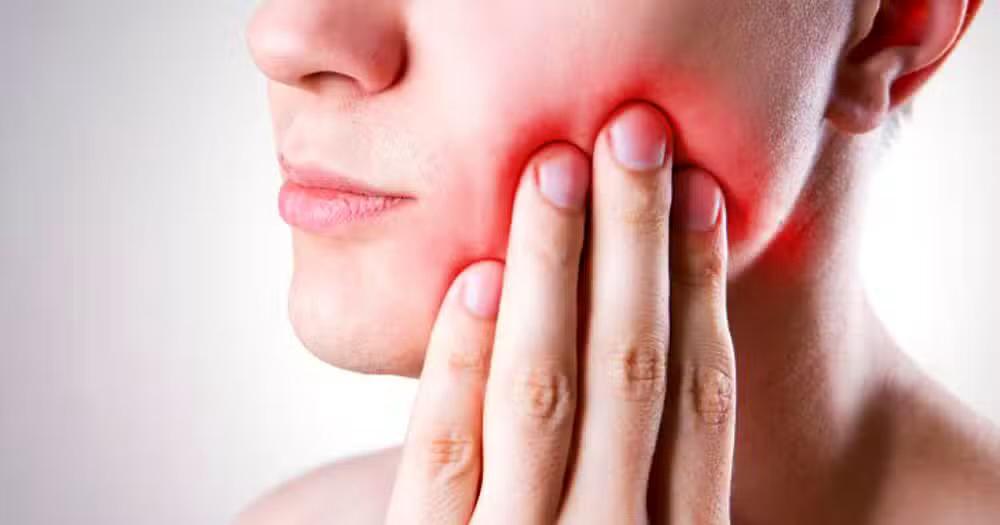
What is the temporomandibular joint?
The temporomandibular joint (TMJ) is a small joint located in front of the ear, at the point where the skull and the lower jaw meet. It allows the lower jaw (mandible) to move and function.
What are the symptoms of jaw joint disorders?
TMJ disorders are very common and show a variety of symptoms. Patients may complain of earache, headache and a limited ability to open the mouth. Patients may also complain of clicking or grinding sounds in the joint and of pain when opening and closing the mouth.
It is important to determine the cause of the TMJ problem, because the cause guides the treatment.
One cause of TMJ symptoms is arthritis. It may result from an injury or from grinding of the teeth at night. Another common cause is dislocation or displacement of the disc located between the jawbone and its socket. A displaced disc can cause clicking or popping, may restrict the movement of the jaw and can cause pain when opening and closing the mouth. The disc may also develop a hole or perforation, which causes grating during joint movement. There are also conditions, such as trauma or rheumatoid arthritis, in which parts of the TMJ fuse together and completely prevent movement of the jaw.
Stress can trigger pain in the jaw muscles. This pain is very similar to the pain caused by TMJ problems. Affected patients often clench or grind their teeth at night, which leads to painful muscle spasms and difficulty moving the jaw. Muscle and joint problems may also occur together in patients. This is why the diagnosis of TMJ disorders is complex and may require different diagnostic procedures.
How are jaw joint disorders treated?
- Splint therapy
- Arthrocentesis
- Advanced joint surgery
TMJ treatment can range from conventional dentistry and medical treatment to complex operations. Depending on the diagnosis, treatment may vary from short-term non-steroidal anti-inflammatory medication for pain and muscle relaxation, to bite plate or splint therapy, and even stress management therapy. In general, surgery may be required if non-surgical treatment fails or if there is marked joint damage. Surgery may involve arthroscopy (the same method used to examine and treat larger joints such as the knee) or repair of the damaged tissue with a direct surgical approach. Once TMJ disorders have been correctly diagnosed, appropriate treatment can be started.
What should I pay attention to?
Although it varies according to the type of TMJ disorder diagnosed, in general, the points to be observed can be listed as follows:
- First of all, if there is a problem that affects the closing of the teeth (bite), it must be treated.
- Habits such as chewing gum should be given up.
- It should be remembered that this is a condition that is likely to continue throughout life, with acute flare-ups from time to time.
- Care should be taken not to open the mouth suddenly and in an uncontrolled way.
Get information about this treatment
Leave your number and we will call you, or write to us on WhatsApp.