
Following the news that Toprak, whose bleeding could not be stopped after a tooth extraction, lost his life, Dr. Serap Özdamar, Specialist in Oral and Maxillofacial Surgery, shared important information so that such situations can be prevented. Dr. Özdamar explained in detail what to watch for regarding bleeding and clotting problems after tooth extraction, and the precautions that are needed.
How is bleeding after a tooth extraction brought under control, and which situations carry risk?
There are some simple rules that patients must follow after a tooth extraction. Observing these rules is important so that the wound can clot properly. Fatal bleeding as a result of a tooth extraction does not normally occur, but there are special precautions to be taken in patients who have a bleeding or clotting disorder or who are taking medication.
In particular, patients must inform their doctors fully about their bleeding and clotting status, because if the procedure is carried out without this information, adverse outcomes may occur. In a healthy individual, however, it is not possible for bleeding after a tooth extraction to be impossible to stop.
In the extraction of baby teeth, if the root has been completely resorbed (dissolved), anaesthesia may not be needed. In this case bleeding is usually not a problem either. Children can often even pull out their baby teeth by themselves with ease. As this shows, there is no connection at all between extracting a baby tooth without anaesthesia and the occurrence of bleeding.
Important warnings about bleeding after tooth extraction
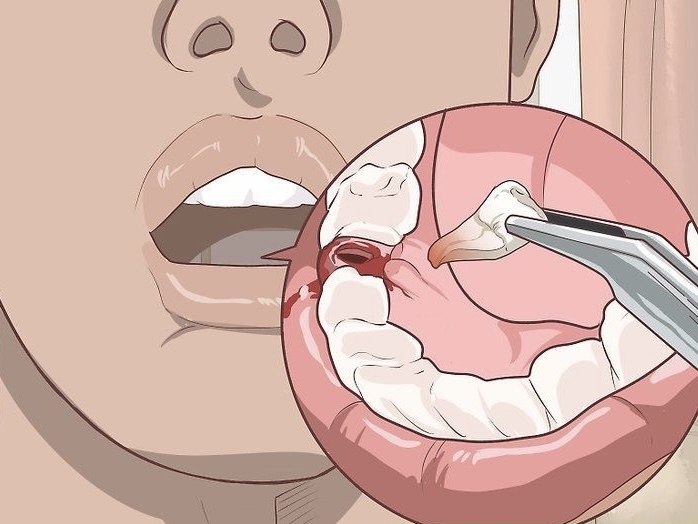
Dr. Özdamar stated that the clot over the wound must be protected during the first 24 hours after a tooth extraction. What should be done after a tooth extraction is to place a gauze pad on the area, apply pressure with the pad and press for half an hour. It is important not to rinse or spit. If such movements are made, the newly formed clot is disturbed and active bleeding may start.
Although it does not apply to children, Dr. Özdamar emphasised that the most important mistake that can disturb the clot at the extraction site is smoking, and stressed that it is very important not to smoke for at least 48 hours after a tooth extraction.
Patients with bleeding and clotting disorders should be careful
If you have any disease related to bleeding and clotting, or if you have had prolonged bleeding after any surgical procedure, or if bleeding does not stop for a long time after an injury, please share this information completely with your doctor.
Patients who use blood-thinning medication can also have teeth extracted, but there are some precautions that must be taken in this case. Patients must give their doctors their medical information completely. When a tooth extraction is required, every kind of dental surgery can be performed as long as appropriate precautions are taken.
In addition, where such special circumstances exist, monitoring the patient after the procedure is extremely important so that timely intervention is possible.
Pay attention to clotting problems
Dr. Serap Özdamar stated that a child's inability to stop bleeding after a tooth extraction may be caused by bleeding and clotting problems or by the medication being used. In every case, patients giving complete and accurate information and the necessary precautions being taken can prevent complications.
Have a question?
Book an appointment for an examination or write to us on WhatsApp.